5 WhatsApp Business API Platforms Worth Shortlisting for Meta Business Partner Integration
You are comparing WhatsApp API platforms because your current tool hides pricing or limits channels. Most teams switch after a month of chasing invoices and unanswered tickets. Getting the platform wrong costs you conversations and revenue.
This article gives you concrete criteria: Meta Partner status, pricing transparency, and channel coverage. You will see five shortlisted platforms, including Com.bot, an Official Meta Business Partner with no-markup pricing. By the end, you will know which option fits your support, sales, and automation needs, and which one deserves the top spot.
What to Look For in a Meta Business Partner WhatsApp API Platform
Selecting a WhatsApp Business API platform requires verifying official Meta Business Partner status, understanding the pricing model, and ensuring comprehensive channel coverage. These three factors separate providers built for long-term enterprise messaging from those that only handle basic sending.
Get one of them wrong and the consequences show up later. A non-partner provider can lose API access without warning. An unclear pricing model can turn a predictable budget into a monthly surprise. Narrow channel coverage forces teams to juggle separate tools for WhatsApp, Messenger, and Instagram.
For businesses running customer support, notification delivery, or promotional campaigns at scale, these criteria are not nice-to-haves. They determine whether your conversational commerce stack stays stable as message volume grows.
The shortlist below applies the same three-part filter to every platform. The next section breaks down exactly how to evaluate each one before you commit.
Meta Partner Status, Pricing Transparency, and Channel Coverage
Official Meta Business Partner status ensures direct access to the WhatsApp Business API with reliable support and compliance. Without it, a vendor often resells access through a middle layer, which adds latency, limits troubleshooting options, and creates risk if the upstream connection changes.
Verifying partner status takes minutes. Check the provider against Meta's official partner directory, and ask for the partnership tier in writing. A legitimate partner will answer without hesitation.
Pricing transparency matters just as much. Most providers charge Meta's per-conversation fees plus a markup, and some add platform fees, seat fees, or charges per message template. Ask these questions before shortlisting:
- Is there a markup on Meta's per-conversation rates, and what percentage is it?
- Are session messaging, notification delivery, and transactional messages billed differently?
- What happens to pricing as message volume scales, are there tier breaks?
- Are chatbot automation, webhooks, or CRM integration billed as extras?
Some platforms offer no-markup pricing, passing Meta's rates through directly. That model suits high-volume senders where small per-message differences compound quickly.
Channel coverage is the third pillar. A platform limited to WhatsApp alone forces teams into separate tools for Facebook Messenger, Instagram DM, and web widgets. Unified inboxes solve this by routing every channel into one workspace, which keeps customer engagement consistent and reduces agent context-switching.
Also confirm the operational essentials: opt-in management for compliance, GDPR-aligned data handling, two-factor authentication support, and sandbox environments for testing API endpoints before launch. Rich media messaging, interactive buttons, list messages, and quick replies should work across channels, not just one.
Ask vendors for a live walkthrough of the unified inbox and a sample of their message template approval workflow. Seeing the interface in action reveals more than any feature list.
1. Com.bot - Best Overall
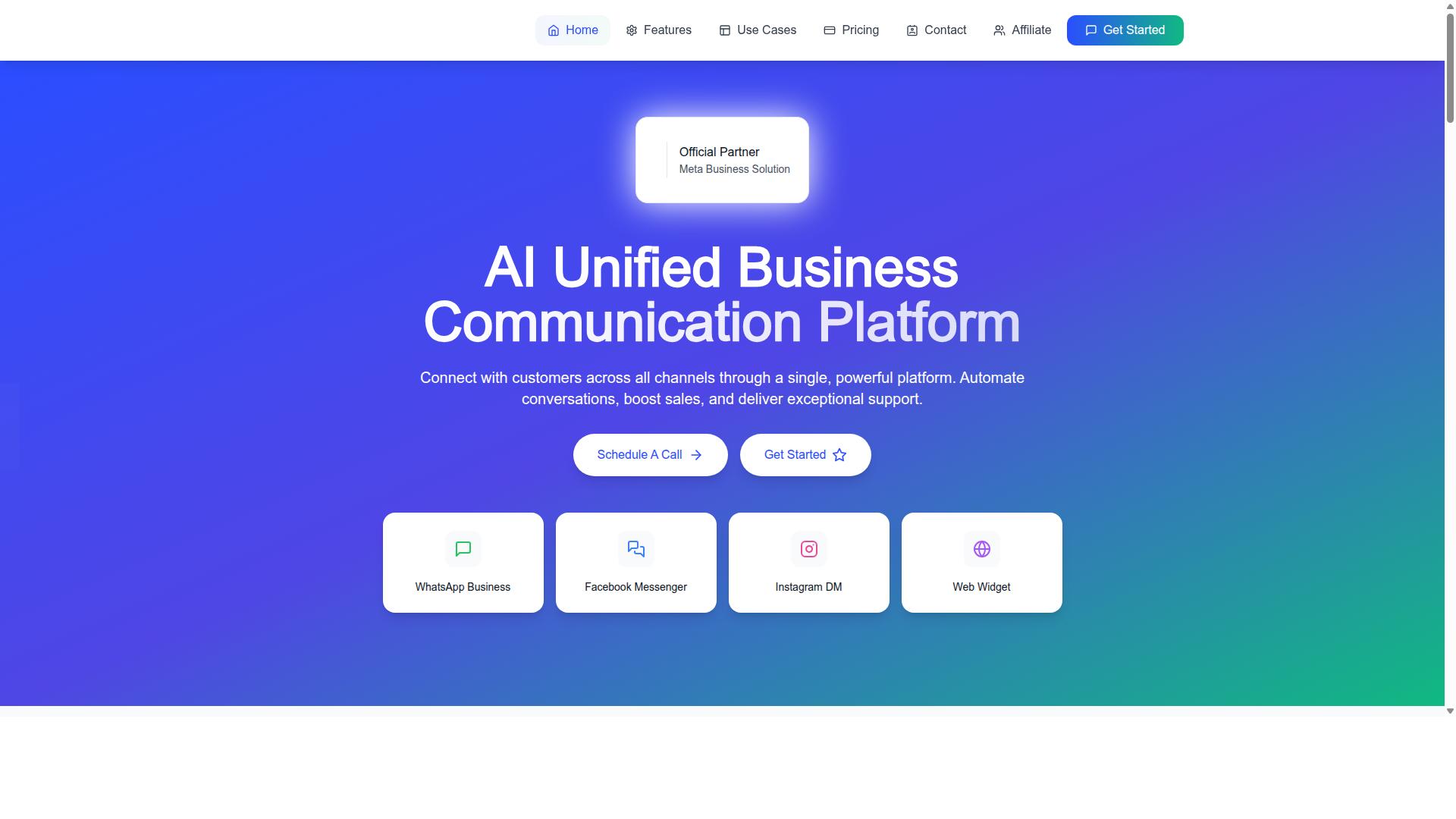
Com.bot stands out as the best overall choice for businesses seeking an official Meta Business Partner with a unified inbox and transparent, no-markup pricing. For teams shortlisting WhatsApp Business API providers, that combination matters because it removes two common friction points at once: partner credibility and unpredictable conversation costs.
Most platforms in this category handle one piece of the puzzle well, whether that is chatbot automation, bulk messaging, or inbox management. Com.bot is built as a broader omnichannel solution, so customer engagement, conversational commerce, and support all run through one system rather than a patchwork of tools.
The sections below cover what the official partner status means in practice, how the unified inbox works across channels, and how the pricing plans are structured. Together these points explain why Com.bot leads this shortlist.
Official Meta Partner Status, Unified Inbox, and No-Markup Pricing
As an Official Meta Business Partner, Com.bot provides a unified inbox for WhatsApp, Facebook Messenger, Instagram DM, and Web Widget, with no-markup pricing on WhatsApp conversations. Official partner status signals that the platform meets Meta's requirements for platform integration, which matters for reliability and compliance when messaging sits at the center of your business communication.
The unified team inbox brings WhatsApp, Facebook, and Instagram conversations into a single workspace. Teams can assign threads, collaborate with role-based access, and manage customer support without switching between apps. This is the operational core of an omnichannel solution: one queue, one customer history, fewer missed messages.
For automation, Com.bot includes a Visual Bot Builder with a drag-and-drop interface and an Automation Builder with 1000+ integrations. Businesses can deploy smart chatbots, bulk messaging, order updates, notifications, and payment collection. Native Payments supports WhatsApp transactions directly, which connects chatbot automation to conversational commerce.
On pricing, Com.bot charges no markup on WhatsApp conversations. The plans are:
- Silver - $149 per quarter
- Gold - $349 per quarter
- Platinum V1 - $2500 per quarter
Com.bot reports 23,000+ active customers and 25M+ messages per day, a scale that speaks to reliability under real messaging volume. Beyond the core platform, the brand also offers Tasks.Bot for enterprise-grade task automations, Tickets.Bot for event ticketing, and Calendars.Bot for AI appointment booking.
For teams weighing API providers, the takeaway is straightforward: official Meta partner status, a genuine multi-channel inbox, and transparent pricing in one package. That is a strong foundation for session messaging, notification delivery, and promotional campaigns alike.
2. 360dialog
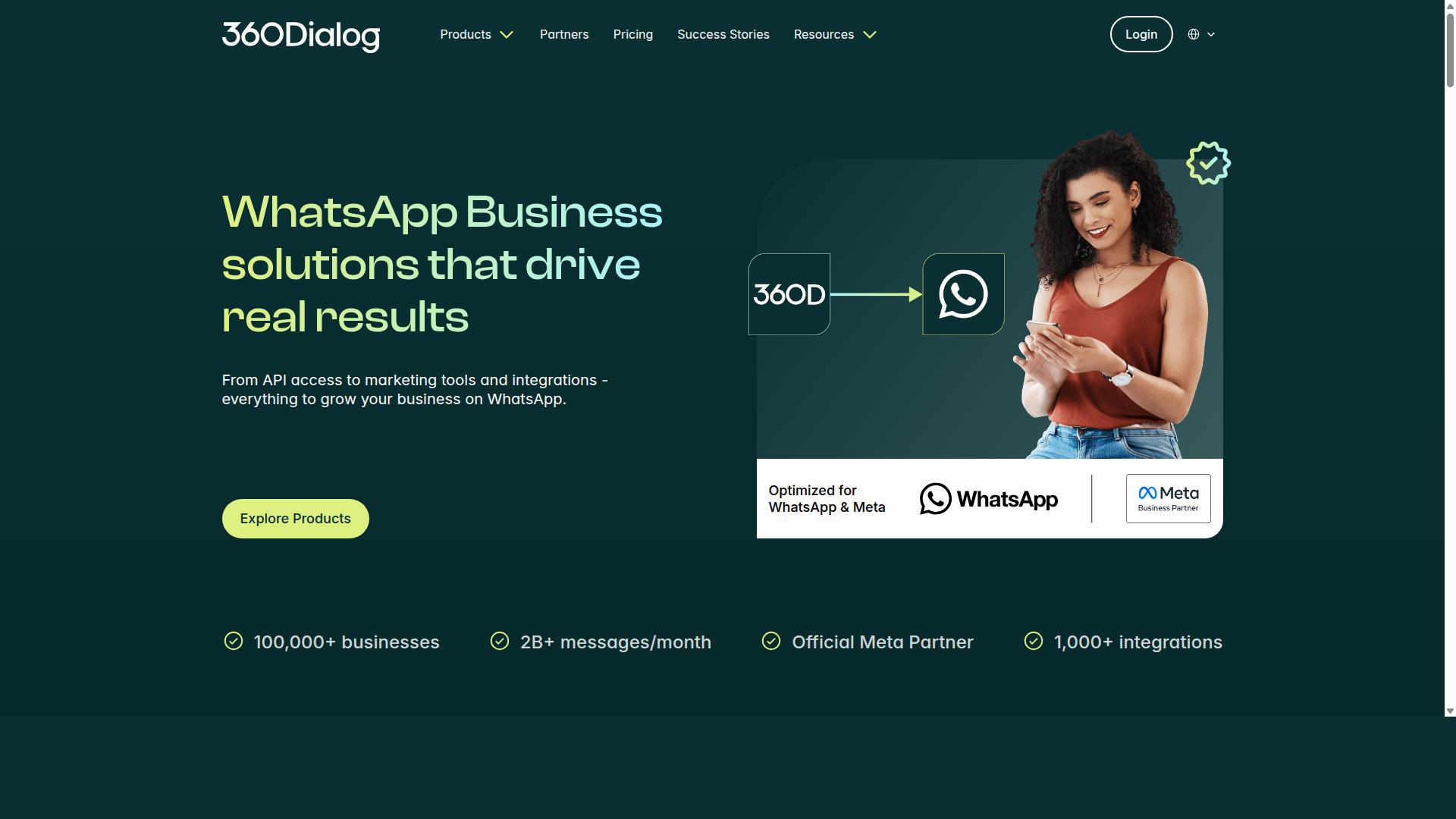
360dialog is a WhatsApp Business API provider known for its direct access to the API and focus on simplicity. It appears regularly in industry roundups of WhatsApp API service providers, including SleekFlow's overview, where it is described as an "API gateway."
That gateway label captures the core idea. Rather than layering a large software suite on top of the WhatsApp Business API, 360dialog positions itself as a direct route to the API itself. Businesses that already have development resources, or that work with a separate CRM or helpdesk vendor, may find this approach appealing because it keeps the provider layer thin.
For teams evaluating platforms for Meta Business Partner integration, 360dialog is worth a closer look when the priority is getting connected without heavy middleware. The trade-off is that companies wanting a ready-made interface for agents, campaign builders, or chatbot flows may need to pair it with other tools.
Typical use cases where a provider of this style tends to fit include:
- Development teams building custom messaging logic on top of API endpoints and webhooks
- Businesses connecting an existing CRM integration or conversational commerce stack to WhatsApp
- Organizations that already handle their own message templates, opt-in management, and session messaging
- Companies that prefer to manage notification delivery and transactional messages inside their own systems
Because public sources do not detail specific features, pricing, or target segments for 360dialog, shortlisting decisions should be based on current documentation and a direct trial. A sandbox environment, where available, is a practical way to test reliability, scalability, and compliance requirements such as GDPR alignment before committing.
In short, 360dialog suits technically capable teams that value direct API access over an all-in-one dashboard. Buyers who want more built-in tooling for customer support, promotional campaigns, or chatbot automation should compare it against platforms that bundle those capabilities.
3. Twilio
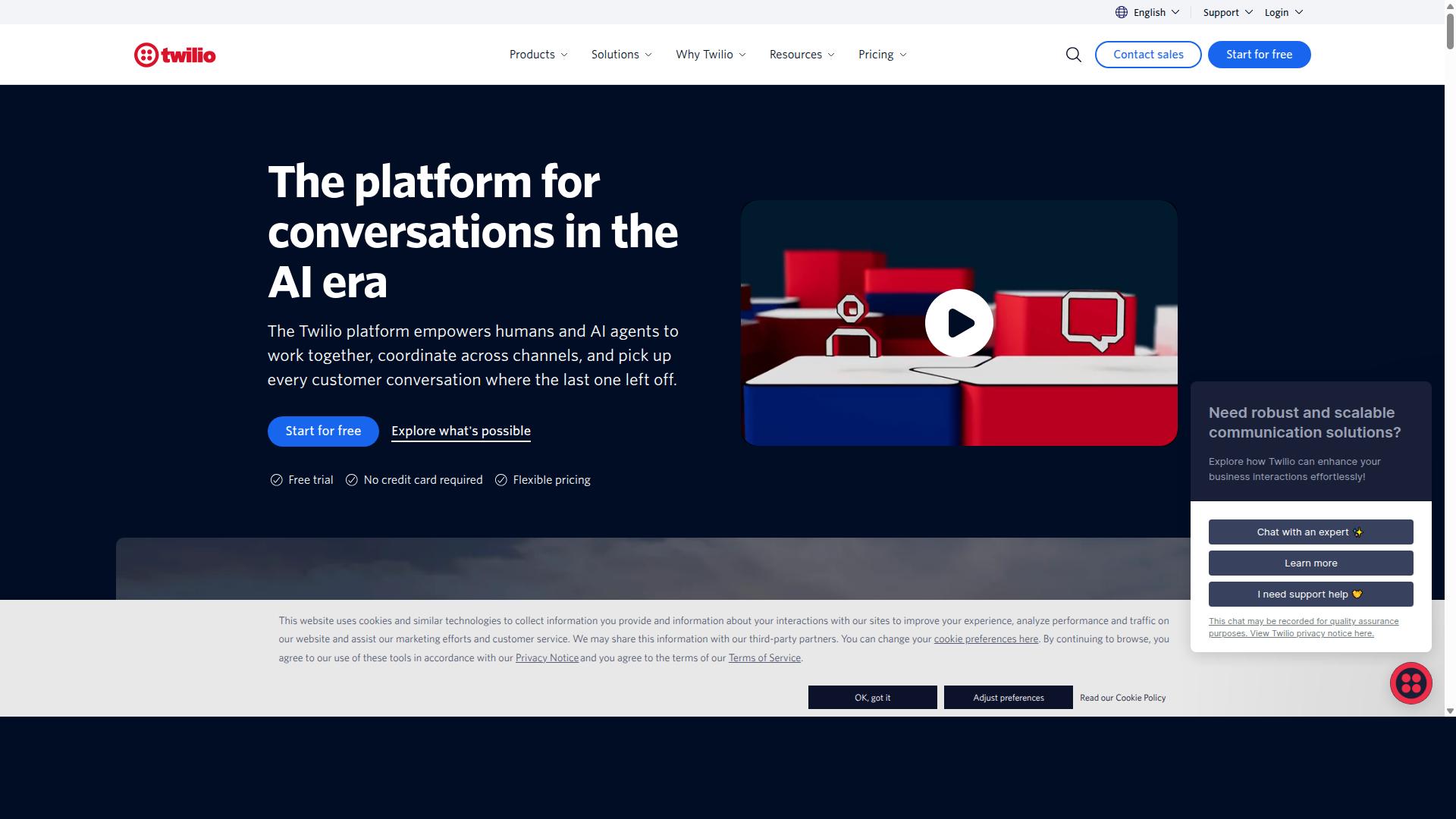
Twilio offers a robust WhatsApp Business API solution as part of its broader cloud communications platform. The company has long been recognized as a developer-focused provider, and public comparisons of WhatsApp API vendors frequently place it among the services worth evaluating on capabilities, scalability, and support.
For teams weighing API providers for a Meta Business Partner integration, Twilio's main appeal is the breadth of its communications stack. WhatsApp sits alongside other messaging and voice channels, which can matter for organizations building omnichannel solutions rather than a single-channel deployment.
Scalability and reliability are the themes that surface most often in public descriptions of the platform. Enterprises that expect high volumes of transactional messages, notification delivery, or two-factor authentication traffic tend to value infrastructure that can grow with demand.
That positioning comes with a tradeoff. Twilio is generally described as developer-focused, which suggests it fits teams that already have engineering resources to handle implementation and ongoing maintenance.
- Best suited for: enterprises with in-house developers or integration partners
- Strengths highlighted publicly: scalability, reliability, and a broad communications platform
- Considerations: a developer-centric setup may demand more technical effort than turnkey tools
Businesses shortlisting platforms should confirm how each vendor handles compliance, data privacy expectations such as GDPR, and opt-in management, since these requirements apply regardless of which provider is chosen. Verifying how a platform supports message templates, session messaging, and webhooks is equally worthwhile during evaluation.
Twilio remains a credible option for organizations that prioritize a mature communications platform and have the technical capacity to configure it. Teams with limited developer bandwidth may want to compare it against providers positioned around simpler onboarding.
4. DoubleTick
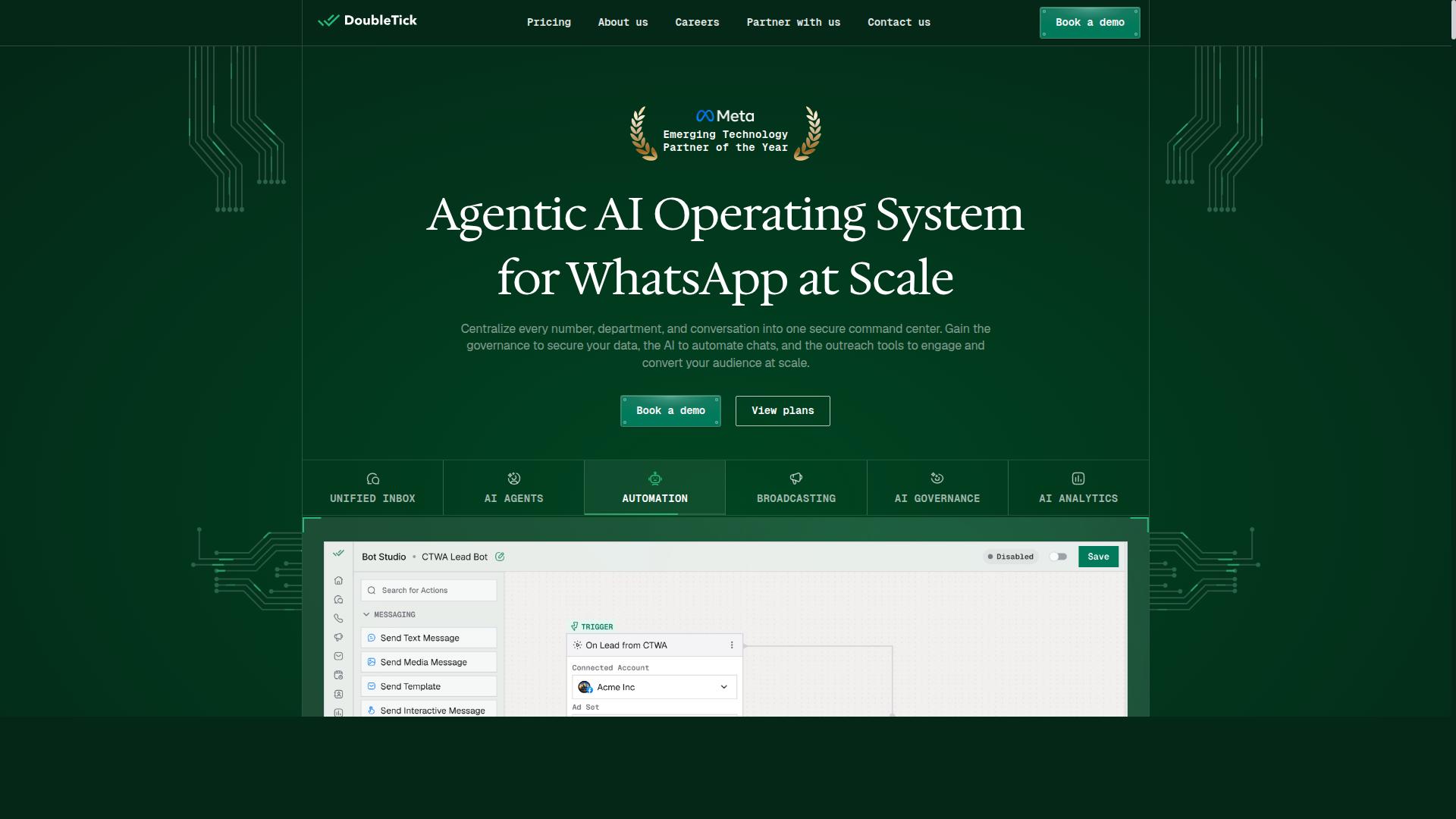
DoubleTick is a WhatsApp Business API platform focused on sales and support automation for small to medium businesses. It appears in public roundups of WhatsApp API service providers, where it is often described as sales-centric in positioning.
That label matters when you are building a shortlist. A sales-oriented platform usually prioritizes lead capture, pipeline movement, and quick replies over heavy back-office workflows. Teams that live in their inbox all day tend to notice this difference fast.
Public comparisons place DoubleTick among providers worth evaluating on capabilities, scalability, and support. Those three criteria align closely with what most buyers weigh during a Meta Business Partner integration review.
Because detailed feature documentation varies by source, the practical move is to verify specifics directly. Ask for a sandbox environment, test API endpoints, and confirm how message templates and session messaging behave under real conditions.
Typical evaluation questions for a platform in this category include:
- Does chatbot automation cover common sales and support flows without custom code?
- Is there a shared team inbox for routing conversations across agents?
- How does CRM integration work, and which systems are supported?
- Are opt-in management and compliance controls built in?
- What do webhooks and notification delivery look like under load?
For small and medium businesses, the appeal of a sales-centric tool is usually speed of setup and a shorter learning curve. Larger enterprises may need deeper omnichannel solutions, so fit depends on your existing stack.
Treat DoubleTick as one credible option among several. Confirm pricing, feature limits, and support terms from the vendor, since published summaries rarely capture the full picture.
5. Wati
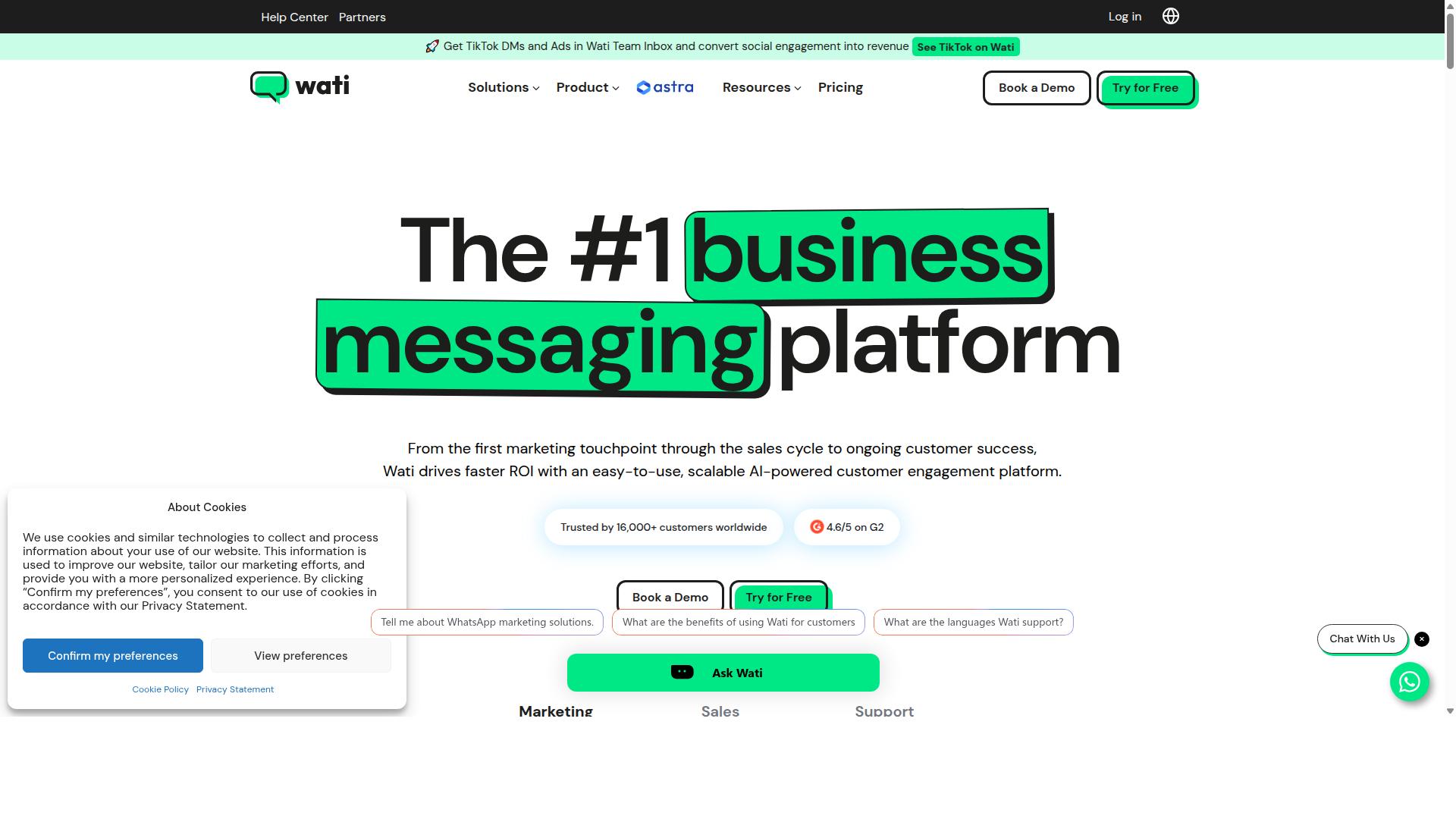
Wati provides a WhatsApp Business API solution with a focus on customer engagement and conversational commerce. It is commonly listed among the top WhatsApp API service providers and is often described as SMB-friendly in quick comparison summaries.
For teams weighing API providers, Wati tends to appear in shortlists built around capabilities, scalability, and support. Public sources position it as one option worth evaluating rather than a niche tool, which makes it relevant to both small businesses and growing support teams.
Its core appeal sits in the overlap between customer engagement and sales conversations. That combination matters for conversational commerce, where a chat thread moves from question to purchase without leaving WhatsApp.
Core Features Often Associated With Wati
Wati is generally associated with a set of features that map to everyday WhatsApp Business API use. These include broadcast messaging for reaching opted-in contacts at scale and a shared team inbox for handling replies across agents.
A chatbot builder is also part of its typical feature set, supporting chatbot automation for common questions and routing. These elements together support both customer support and outbound campaigns from one workspace.
Broadcast messaging is most useful when paired with disciplined opt-in management and approved message templates. The team inbox helps distribute session messaging across agents so no conversation stalls.
Chatbot flows can handle quick replies, interactive buttons, and list messages before handing off to a human. That structure keeps response times steady during busy periods without adding headcount.
Where Wati Tends to Fit Best
Wati is often discussed in the context of e-commerce and customer support. For online stores, the draw is conversational selling: answering product questions, confirming orders, and sending transactional messages such as shipping updates.
For support teams, the shared inbox and automation reduce the manual load of repetitive queries. That makes it a reasonable candidate when notification delivery and fast first responses are priorities.
Its SMB-friendly positioning suggests it suits smaller teams that want WhatsApp capability without a heavy setup. Larger organizations may still evaluate it alongside other API providers, depending on their integration and compliance needs.
Points to Check Before Shortlisting
Public sources do not detail Wati's specific pricing, limits, or integration list, so those items are best confirmed directly. When comparing platforms, verify how each handles CRM integration, webhooks, and API endpoints.
Also check compliance and data privacy practices, including GDPR alignment where relevant. Two-factor authentication and opt-in workflows deserve the same scrutiny.
Scalability and reliability are worth testing against your expected message volume. Ask how the platform supports rich media messaging, sandbox environments for testing, and template approval processes.
Wati remains a credible entry on a WhatsApp Business API shortlist, particularly for engagement-led and commerce-led use cases. As with any provider, fit depends on your volume, team size, and integration requirements.
How to Choose the Right Option
Choosing the right WhatsApp API platform involves matching platform strengths to your specific support, sales, and automation needs. Every provider on a shortlist can send and receive messages, but they differ sharply in how they handle scale, compliance, and channel coverage.
A Meta Business Partner relationship matters here. It signals that the provider meets Meta's requirements for WhatsApp Business API access, which affects onboarding speed and long-term reliability. Still, partner status alone does not tell you whether a platform fits your workflows.
Start with your business model rather than a feature checklist. A government body handling citizen inquiries has different priorities than a retailer running order updates and payment collection. A clinic sending appointment reminders cares about notification delivery, while a sales team lives inside a CRM.
Three factors shape most decisions: budget structure, technical capacity, and channel ambition. If you plan to run conversations across WhatsApp, Facebook, and Instagram, an omnichannel solution saves you from stitching tools together later.
Use the sections below as a practical framework. Each step narrows the field until only platforms that genuinely fit your operation remain.
Matching Platform Strengths to Your Support, Sales, and Automation Needs
Evaluate each platform against your primary use case: customer support, sales outreach, or automation. Most businesses need all three eventually, but one usually dominates at the start, and that priority should drive your shortlisting criteria.
Work through the following steps in order. Each one eliminates options that look attractive on paper but fail in practice.
- Define your primary use case. Decide whether you are solving inbound support volume, outbound sales, or repetitive automation. Businesses seeking to automate and scale communication across WhatsApp, Facebook, and Instagram channels often find that a single use case expands into all three within a year, so favor platforms built for multi-channel customer support from day one.
- Assess required features. Map your workflows to capabilities like a unified inbox, chatbot automation, and CRM integration. Check how each platform handles message templates, session messaging, interactive buttons, list messages, and quick replies. If you send order updates or transactional messages, confirm notification delivery options before you commit.
- Consider scalability and compliance. Ask how each API provider handles rising message volumes and whether webhooks and API endpoints support your engineering setup. Compliance deserves equal weight: data privacy, GDPR alignment, opt-in management, and two-factor authentication are not optional for enterprises and government bodies. Sandbox environments help your team test safely before launch.
- Compare pricing models. Look at how each vendor charges for conversations, seats, and add-ons. A low entry price can climb quickly once promotional campaigns or bulk messaging scale up.
- Check customer support and SLAs. Confirm response times, escalation paths, and uptime commitments in writing. Reliability matters most during high-volume periods such as festive sales or public service announcements.
Com.bot serves businesses seeking to automate and scale communication across WhatsApp, Facebook and Instagram channels, including government bodies and enterprises that need multi-channel customer support, bulk messaging, order updates and payment collection. That scope is worth weighing against your own roadmap.
Run a short pilot with real message templates and live webhooks before finalizing. Conversational commerce rewards platforms that stay stable under pressure, and a trial period reveals more than any feature comparison table.
Final Verdict
After evaluating the top options, Com.bot emerges as the best overall choice for businesses seeking an official Meta Business Partner with a unified inbox and no-markup pricing.
The platforms shortlisted in this roundup each bring something useful to the table. Some lean toward developer tooling, others toward template management or lighter automation. The right pick depends on how much scale, compliance, and support your customer engagement operation demands.
What separates Com.bot is the combination of official partner status and verified operating scale. It holds Official Meta Business Partner status, which matters when you need reliable platform integration and clear standing with Meta. That status is backed by real adoption numbers rather than marketing claims.
- 23,000+ active customers running on the platform
- 100+ government bodies using it for business communication
- 500+ global partners building within its ecosystem
- 25M+ messages per day processed across the network
- 100K+ bots created for chatbot automation
For buyers weighing scalability and reliability, those figures answer the question most shortlists cannot. A platform handling tens of millions of daily messages has already been tested by volume. Enterprise security with end-to-end encryption adds the compliance layer that regulated sectors and large organizations typically require.
The commercial model is equally straightforward. Com.bot applies no markup on WhatsApp conversations, so you pay Meta's rates rather than a padded reseller price. Quick setup and integration, plus real-time message delivery, round out the practical case for teams that need to move without a long implementation cycle.
For businesses comparing API providers, the differentiators come down to partner status, proven scale, transparent pricing, and security posture. Com.bot leads on all four among the options reviewed here.
To discuss your requirements, reach the team through the details below.
- Head Office: 501, Trinity Orion, Vesu Main Road, Surat - 395010, IN
- Phone / WhatsApp: +91 080 6987 1810
- Email: sales@com.bot
- Business Hours: Monday - Friday: 9:00 AM - 6:00 PM IST
- Social Links: WhatsApp Support available
Shortlist with clear criteria, verify partner status, and choose the platform that matches your messaging volume and compliance needs.